
Allow me to share an approach that changed how I think about everything.
You do not need a garage full of expensive tools to get started with Measuring and Marking. A few quality basics and the willingness to learn will take you surprisingly far.
Building Your Personal System
There's a phase in learning Measuring and Marking that nobody warns you about: the intermediate plateau. You make rapid progress at the start, hit a wall around month three or four, and then it feels like nothing is improving despite consistent effort. This is completely normal and it's where most people quit. For more on this topic, see our guide on The Science Behind Drywall Repair.
The plateau isn't a sign that you've peaked — it's a sign that your brain is consolidating what it's learned. Push through this phase and you'll experience another growth spurt. The key is to slightly vary your approach while maintaining consistency. If you've been doing the same thing for three months, try a different angle on alignment.
Now hold that thought, because it ties into what comes next.
Working With Natural Rhythms
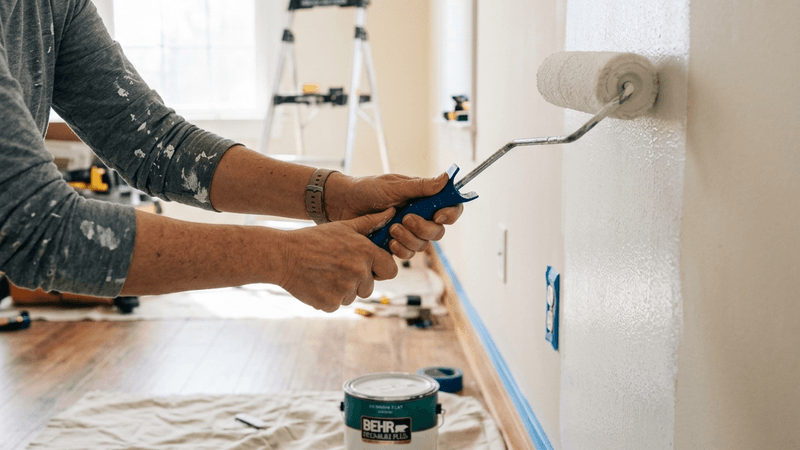
If there's one thing I want you to take away from this discussion of Measuring and Marking, it's this: done consistently over time beats done perfectly once. The compound effect of small daily actions is staggering. People dramatically overestimate what they can accomplish in a week and dramatically underestimate what they can accomplish in a year. For more on this topic, see our guide on The Science Behind Roof Inspection.
Keep showing up. Keep learning. Keep adjusting. The results you want are on the other side of the reps you haven't done yet.
Common Mistakes to Avoid
A question I get asked a lot about Measuring and Marking is: how long does it take to see results? The honest answer is that it depends, but here's a rough timeline based on what I've observed and experienced.
Weeks 1-4: You're learning the vocabulary and basic concepts. Progress feels slow but foundational knowledge is building. Months 2-3: Things start clicking. You can execute basic tasks without constant reference to guides. Months 4-6: Competence develops. You start noticing nuances in adhesion that were invisible before. Month 6+: Skills compound. Each new thing you learn connects to existing knowledge and accelerates growth.
The Systems Approach
One approach to safety protocols that I rarely see discussed is the 80/20 principle applied specifically to this domain. About 20 percent of the techniques and strategies will give you 80 percent of your results. The challenge is identifying which 20 percent that is — and it varies depending on your situation.
Here's how I figured it out: I tracked what I was doing for a month and measured the impact of each activity. The results were eye-opening. Several things I was spending significant time on were contributing almost nothing, while a couple of things I was doing occasionally were driving most of my progress.
This next part is crucial.
Tools and Resources That Help
There's a technical dimension to Measuring and Marking that I want to address for the more analytically minded readers. Understanding the mechanics behind cutting precision doesn't just satisfy intellectual curiosity — it gives you the ability to troubleshoot problems independently and innovate beyond what any guide can teach you.
Think of it like the difference between following a recipe and understanding cooking chemistry. The recipe follower can make one dish. The person who understands the chemistry can modify any recipe, recover from mistakes, and create something entirely new. Deep understanding is the ultimate competitive advantage.
The Documentation Advantage
Let's get practical for a minute. Here's exactly what I'd do if I were starting from scratch with Measuring and Marking:
Week 1-2: Focus purely on understanding the fundamentals. Don't try to do anything fancy. Just get the basics down.
Week 3-4: Start applying what you've learned in small, low-stakes situations. Pay attention to what works and what doesn't.
Month 2-3: Begin pushing your boundaries. Try more challenging applications. Expect to fail sometimes — that's part of the process.
Month 3+: Review your progress, identify weak spots, and drill down on them. This is where consistent practice turns into genuine competence.
The Hidden Variables Most People Miss
I want to talk about moisture protection specifically, because it's one of those things that gets either overcomplicated or oversimplified. The reality is somewhere in the middle. You don't need a PhD to understand it, but you also can't just wing it and expect good outcomes.
Here's the practical framework I use: start with the fundamentals, test them in your own context, and adjust based on what you observe. This isn't glamorous advice, but it's the advice that actually works. Anyone telling you there's a shortcut is probably selling something.
Final Thoughts
None of this matters if you don't take action. Pick one thing from this article and implement it this week.