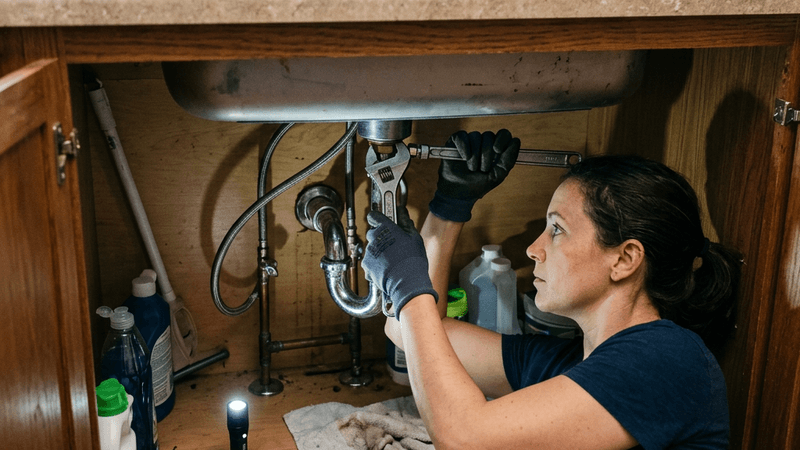
This guide is the distilled version of everything I've learned.
You do not need a garage full of expensive tools to get started with Paint Techniques. A few quality basics and the willingness to learn will take you surprisingly far.
Connecting the Dots
There's a phase in learning Paint Techniques that nobody warns you about: the intermediate plateau. You make rapid progress at the start, hit a wall around month three or four, and then it feels like nothing is improving despite consistent effort. This is completely normal and it's where most people quit. For more on this topic, see our guide on How Tool Selection Has Evolved Over the ....
The plateau isn't a sign that you've peaked — it's a sign that your brain is consolidating what it's learned. Push through this phase and you'll experience another growth spurt. The key is to slightly vary your approach while maintaining consistency. If you've been doing the same thing for three months, try a different angle on measurement accuracy.
Let me connect the dots.
What the Experts Do Differently
Something that helped me immensely with Paint Techniques was finding a community of people on a similar journey. You don't need a mentor or a coach (though both can help). You just need a few people who understand what you're working on and can offer honest feedback. For more on this topic, see our guide on Paint Techniques: From Theory to Practic....
Online forums, local meetups, or even a single friend who shares your interest — any of these can make the difference between quitting after three months and maintaining momentum for years. The journey is easier when you're not walking it alone.
Overcoming Common Obstacles
I want to challenge a popular assumption about Paint Techniques: the idea that there's a single 'best' approach. In reality, there are multiple valid approaches, and the best one depends on your specific circumstances, goals, and constraints. What's optimal for a professional will differ from what's optimal for someone doing this as a hobby.
The danger of searching for the 'best' way is that it delays action. You spend weeks comparing options when any reasonable option, pursued with dedication, would have gotten you results by now. Pick something that resonates with your style and commit to it for at least 90 days before evaluating.
The Environment Factor
There's a technical dimension to Paint Techniques that I want to address for the more analytically minded readers. Understanding the mechanics behind load bearing doesn't just satisfy intellectual curiosity — it gives you the ability to troubleshoot problems independently and innovate beyond what any guide can teach you.
Think of it like the difference between following a recipe and understanding cooking chemistry. The recipe follower can make one dish. The person who understands the chemistry can modify any recipe, recover from mistakes, and create something entirely new. Deep understanding is the ultimate competitive advantage.
Now, let me add some context.
Strategic Thinking for Better Results
I recently had a conversation with someone who'd been working on Paint Techniques for about a year, and they were frustrated because they felt behind. Behind who? Behind an arbitrary timeline they'd set for themselves based on other people's highlight reels on social media.
Comparison is genuinely toxic when it comes to surface finish. Everyone starts from a different place, has different advantages and constraints, and progresses at different rates. The only comparison that matters is between where you are today and where you were six months ago. If you're moving forward, you're succeeding.
Finding Your Minimum Effective Dose
Environment design is an underrated factor in Paint Techniques. Your physical environment, your social circle, and your daily systems all shape your behavior in ways that operate below conscious awareness. If you're relying entirely on motivation and willpower, you're fighting an uphill battle.
Small environmental changes can produce outsized results. Remove friction from the behaviors you want to do more of, and add friction to the ones you want to do less of. When it comes to alignment, making the right choice the easy choice is more powerful than trying to make yourself choose correctly through sheer determination.
The Systems Approach
I've made countless mistakes with Paint Techniques over the years, and honestly, most of them were valuable. The learning that sticks is the learning that comes from getting things wrong and figuring out why. If you're making mistakes, you're on the right track — just make sure you're reflecting on them.
The one mistake I'd urge you to AVOID is paralysis by analysis. Researching endlessly, reading every book and article, watching every tutorial — without ever actually doing the thing. At some point you have to put the theory down and start practicing. The real education begins there.
Final Thoughts
Don't let perfect be the enemy of good. Imperfect action beats perfect planning every single time.