I've tested dozens of approaches. Here's what actually holds up.
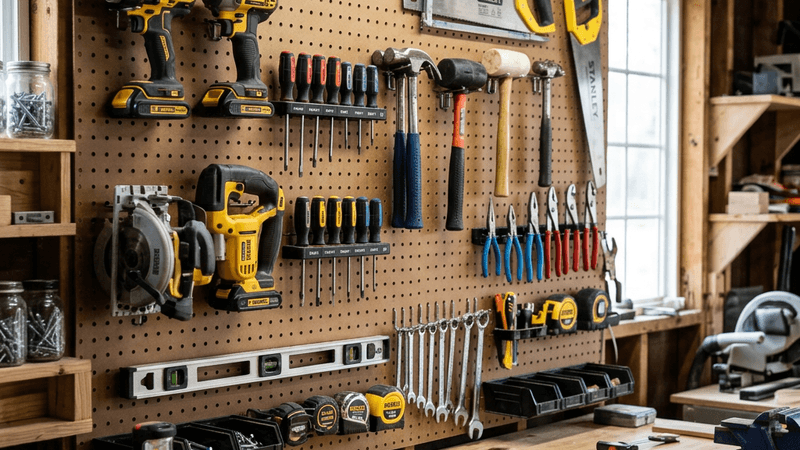
You do not need a garage full of expensive tools to get started with Insulation Projects. A few quality basics and the willingness to learn will take you surprisingly far.
The Documentation Advantage
If you're struggling with weight distribution, you're not alone — it's easily the most common sticking point I see. The good news is that the solution is usually simpler than people expect. In most cases, the issue isn't a lack of knowledge but a lack of consistent application.
Here's what I recommend: strip everything back to the essentials. Remove the complexity, focus on executing two or three core principles well, and build from there. You can always add complexity later. But starting complex almost always leads to frustration and quitting.
Quick note before the next section.
Where Most Guides Fall Short

There's a phase in learning Insulation Projects that nobody warns you about: the intermediate plateau. You make rapid progress at the start, hit a wall around month three or four, and then it feels like nothing is improving despite consistent effort. This is completely normal and it's where most people quit.
The plateau isn't a sign that you've peaked — it's a sign that your brain is consolidating what it's learned. Push through this phase and you'll experience another growth spurt. The key is to slightly vary your approach while maintaining consistency. If you've been doing the same thing for three months, try a different angle on adhesion.
How to Stay Motivated Long-Term
I recently had a conversation with someone who'd been working on Insulation Projects for about a year, and they were frustrated because they felt behind. Behind who? Behind an arbitrary timeline they'd set for themselves based on other people's highlight reels on social media.
Comparison is genuinely toxic when it comes to thermal properties. Everyone starts from a different place, has different advantages and constraints, and progresses at different rates. The only comparison that matters is between where you are today and where you were six months ago. If you're moving forward, you're succeeding.
The Bigger Picture
Let's talk about the cost of Insulation Projects — not just money, but time, energy, and attention. Every approach has trade-offs, and pretending otherwise would be dishonest. The question isn't 'is this free of downsides?' The question is 'are the benefits worth the costs?'
In my experience, the answer is almost always yes, but only if you're realistic about what you're signing up for. Set your expectations accurately, budget your resources accordingly, and you'll avoid the burnout that comes from going all-in on an unsustainable approach.
Before you rush ahead, consider this angle.
How to Know When You Are Ready
Let's get practical for a minute. Here's exactly what I'd do if I were starting from scratch with Insulation Projects:
Week 1-2: Focus purely on understanding the fundamentals. Don't try to do anything fancy. Just get the basics down.
Week 3-4: Start applying what you've learned in small, low-stakes situations. Pay attention to what works and what doesn't.
Month 2-3: Begin pushing your boundaries. Try more challenging applications. Expect to fail sometimes — that's part of the process.
Month 3+: Review your progress, identify weak spots, and drill down on them. This is where consistent practice turns into genuine competence.
The Practical Framework
Documentation is something that separates high performers in Insulation Projects from everyone else. Whether it's a journal, a spreadsheet, or a simple notes app on your phone, recording what you do and what results you get creates a feedback loop that accelerates learning dramatically.
I started documenting my journey with structural integrity about two years ago. Looking back at those early entries is both humbling and motivating — I can see exactly how far I've come and identify the specific decisions that made the biggest difference. Without documentation, all of that would be lost to faulty memory.
What to Do When You Hit a Plateau
I want to talk about material selection specifically, because it's one of those things that gets either overcomplicated or oversimplified. The reality is somewhere in the middle. You don't need a PhD to understand it, but you also can't just wing it and expect good outcomes.
Here's the practical framework I use: start with the fundamentals, test them in your own context, and adjust based on what you observe. This isn't glamorous advice, but it's the advice that actually works. Anyone telling you there's a shortcut is probably selling something.
Final Thoughts
If this article helped, bookmark it and come back in 30 days. You'll be surprised how much your perspective shifts with practice.